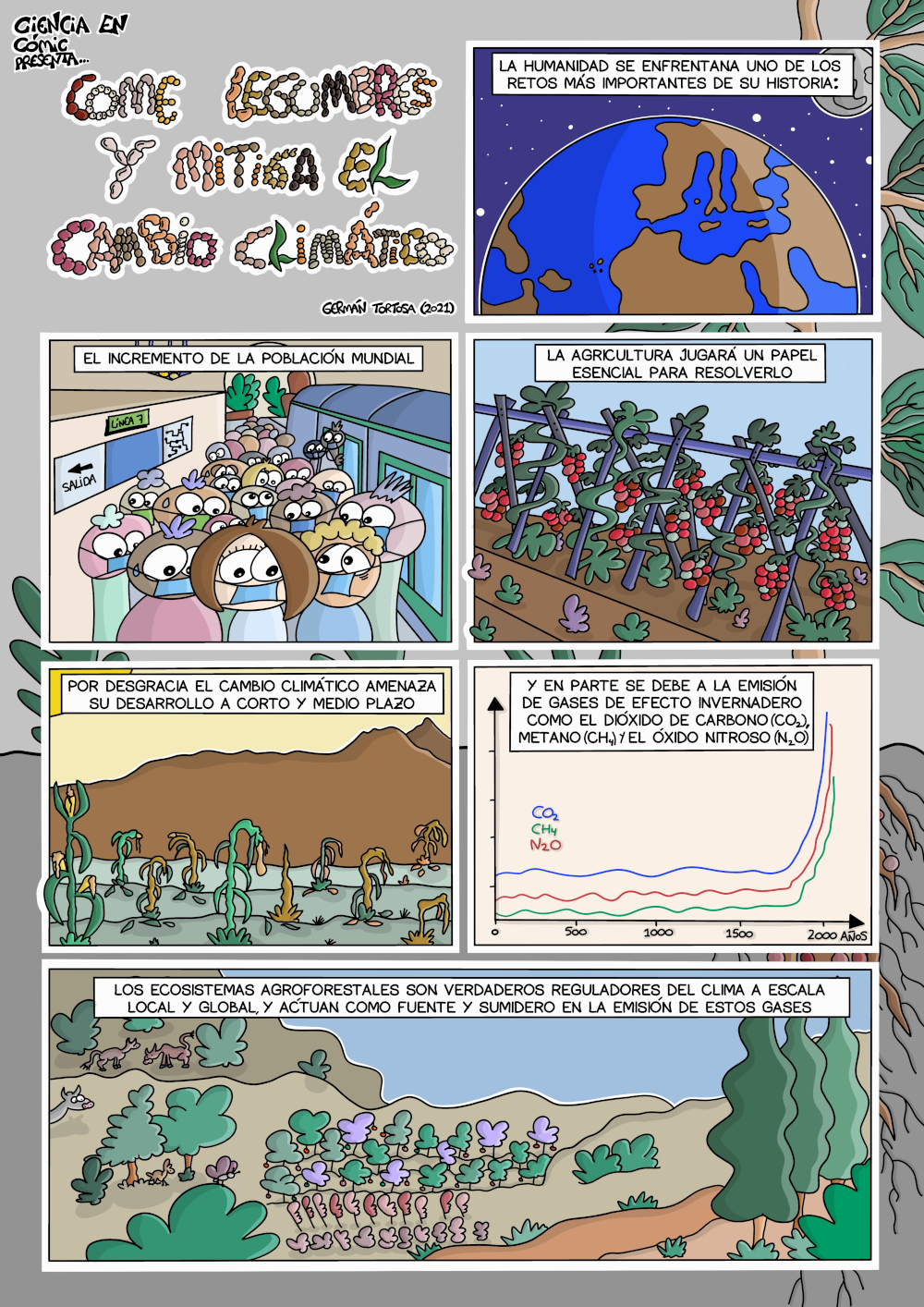
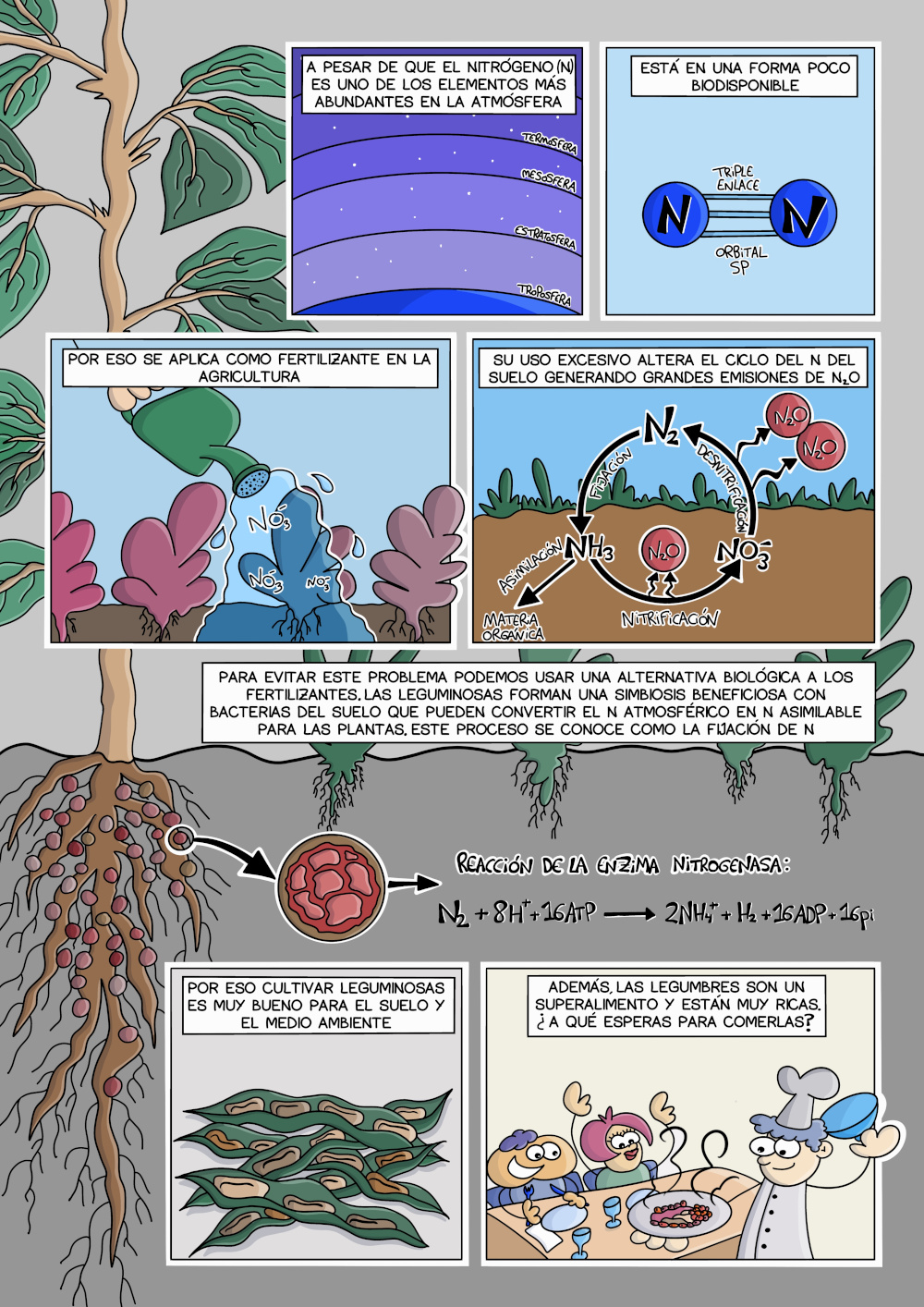
La humanidad se enfrenta a uno de los retos más importantes de su historia: el incremento de la población mundial. La agricultura jugará un papel esencial para resolverlo pero por desgracia el cambio climático amenaza su desarrollo a corto y medio plazo. En parte se debe a la emisión de gases de efecto invernadero como el dióxido de carbono (CO2), el metano (CH4) y el óxido nitroso (N2O). Los ecosistemas agroforestales son verdaderos reguladores del clima a escala local y global, y actúan como fuente y sumidero en la emisión de estos gases. A pesar de que el nitrógeno es uno de los elementos más abundantes en la atmósfera, está en una forma poco disponible (N2). Por eso se aplica como fertilizante en la agricultura aunque su uso excesivo altera el ciclo del nitrógeno del suelo generando grandes emisiones de N2O. Para evitar este problema, podemos usar una alternativa biológica a los fertilizantes. La leguminosas forman una simbiosis beneficiosa con las bacterias del suelo, las cuales pueden convertir el nitrógeno atmosférico en nitrógeno asimilable para las plantas. Este proceso se conoce como la fijación de nitrógeno.
Por eso cultivar leguminosas es muy bueno para el suelo y el medio ambiente. Además, las legumbres son un superalimento y están muy ricas. ¿A qué esperas para comerlas?